Types of Finishes
No woodworking project can be complete without the process called "finishing". This process can make or break a woodworking project and mean the difference between a high-end piece of artisinal furniture or a "shabby chic" piece. Woodworkers can chose between natural finishes such as waxes and oils or synthetic finishes like stain or even paint.
Natural Finishes
Shellac |
|
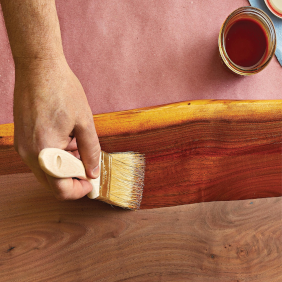
| Shellac comes from shell and lac, a partial calque of French laque en écailles, 'lac in thin pieces', later gomme-laque, 'gum lac'. Most European languages (except Romance ones and Greek) have borrowed the word for the substance from English or from the German equivalent Schellack. In layman's terms, its bug excretions. | |
Tung Oil |
|
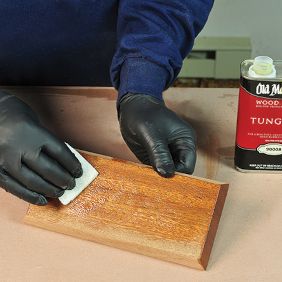
| Tung oil is derived from the seeds of the tung tree (Vernicia fordii) and is known for its ability to penetrate deeply into wood fibers. It hardens upon exposure to air, creating a durable, water-resistant finish that enhances the natural grain and color of the wood. Unlike synthetic finishes, tung oil provides a breathable coating that allows the wood to maintain its natural feel and appearance. |
Synthetic Finishes
Stain |
|
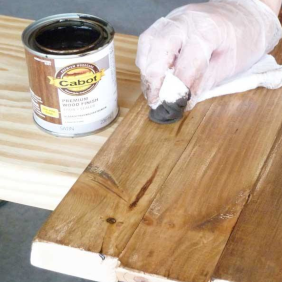
| Wood staining is the process of enhancing the color of the wood to bring out the visibility of its beautiful natural grain. Staining is done using a tinted coating, which is a bit similar to paint. People often use the word “staining” interchangeably with finishing or sealing, which technically isn’t correct. | |
Paint |
|
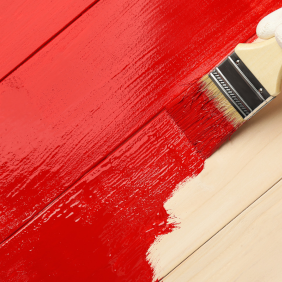
| Painting wood opens up unlimited possibilities for adding bold, vibrant color to projects. Properly applied painted finishes protect the wood while allowing for creative decorating options. Though painting is a perfectly acceptable finish in some instances, many woodworkers hate using it on anything but cheaper softwoods such as pine. No woodworker willingly likes to cover up the beautiful grain and natural color of the more exotic hardwoods. |